A reflection on myself as an adult learner.

learn

As I worked through my Inquiry Based Project and reflected on what I believe about adult learners, I could easily see myself in those foundation statements that guide who I am as a teacher of adults and most surprisingly in myself, as an adult learner.  Let’s consider a few examples:

1.)  Adults will only learn when they feel they need to learn…Until I could see how this project was actually connected to adult learning principles, I didn’t want to do it.  Once I saw how this was going to benefit me right now, I was off and running.

2.)  Adults must want to learn…Once I found an activity that I really wanted to do, I was quickly able to relate much of what we were doing in the classroom to my own learning in painting a peacock of all things,  actually learning better.  I wanted to do the paining and hence, now I wanted to do this project and I approached it differently and with zest.

3.)  Adults Learn by Doing…Our Instructor could have reviewed adult learning principles and instructional methods in many different ways.  She chose this assignment knowing that we would actually learn better by doing something we wanted to do.  Quite a sneaky approach.

4.)  Experience affects adult learning…Many of my past experiences as a student were a factor in my learning.  Both rich and valuable experiences gave me confidence to take a risk, but also those negative and harmful experiences played loud tapes in my mind whispering that I couldn’t do this, that I  wasn’t good enough.

5.)  Adults learn best in an informal situation…How wonderful that our painting classroom was relaxed, full of laughter and chatter, and in a bar.  No painter in that room was off task and even with our giggles, the teacher was able to demonstrate what we were doing and we were all on task.  While not for every situation, brilliant concept here.

6.)  Adults want guidance…I definitely needed support and guidance as I stretched my wings and painted BUT…I definitely did not want to be forced to fit a small little box.  Imagine if we had been told that we had to duplicate exactly what the teacher had painted that night, every learner in that room would have failed miserably.  Hmmm, we all painted a peacock though…and the celebration was not so much about the darn peacock but rather celebrating the process of painting.  This was true in our Advanced Instructional Methods class too.

So, what I take from this project and class is the challenge to better consider these beliefs and others that are important to successful adult learning.  It is time to renew my commitment to those principles identified in the ALFICan Research Project.  It is a challenge that I better understand and can fully embrace having had a very small taste of it.

peacocks


Stories are important! – Digital Storyboards

In my culture, stories are important.  Our Elders and “teachers” have always guided us with story.  As I grew up, when my Aunties felt I needed  to “adjust” my own story, they would tell me a story.  I took what I needed from those stories, in fact, I still do.

So, what I know about stories already,  invites the use of Digital Stories, as a teaching tool and the prospects are exciting.  As much as we should be using this approach simply for academic reasons, there are equally as many, maybe even more reasons, to use this approach to build relationships and community and to profile the happy celebration stories that motivate, ground, and inspire us.  Academically, the benefits are too broad to list in this blog, but consider a few:  learning new vocabulary, writing a script, exploring new technology, math problem solving used to time slides or music, the planning that is involved in sequencing the images, and even the relationships developed in the process.  More than enough reasons to try this, but the best reason is making a Digital Story would undoubtedly be fun to make and to watch.

So in my immediate context, I can see this being a fantastic activity for students to use a Digital Story to tell the story of one graduating student in our Graduating Class.  This would become part of an English 20F or 30S class and students who are not graduating would be assigned the task to create a Digital Story, as a small group project.  They would work in groups of 3 or 4 to research, interview, to collect artifacts (photos and images) and to produce a Digital Story.  They would be limited to using only photos and images, no videos,  for the first attempt.  They would be invited to include music and/or voice recordings from the graduate or maybe the graduates family.  These Digital Stories would be a graded assignment, based on provincial learning outcomes.  BUT, more deliciously, these Digital Stories would honour graduates and perhaps motivate and guide those still working towards their goal of a high school diploma.  The completed stories could easily be shown at a graduation event, on a program website, and most definitely at future student orientation sessions.

The project would be introduced with my own Digital Story, that of a teenage mother and adult learning centre graduate, who has gone on to become a school principal.  My Digital Story would be used to teach the steps and to consider the details of their own project.  My Digital Story would be deconstructed in a process allowing student groups to plan their own project and piece.  I would use Microsoft Movie Maker, only because I have used this software before, and I would use both paper and electronic resources.

Finally, there are so many tools available online.  I want to share two in this blog:

1.)  8 steps to Great Digital Storytelling

Check out the 8 steps in the process.  Lays this out nicely.

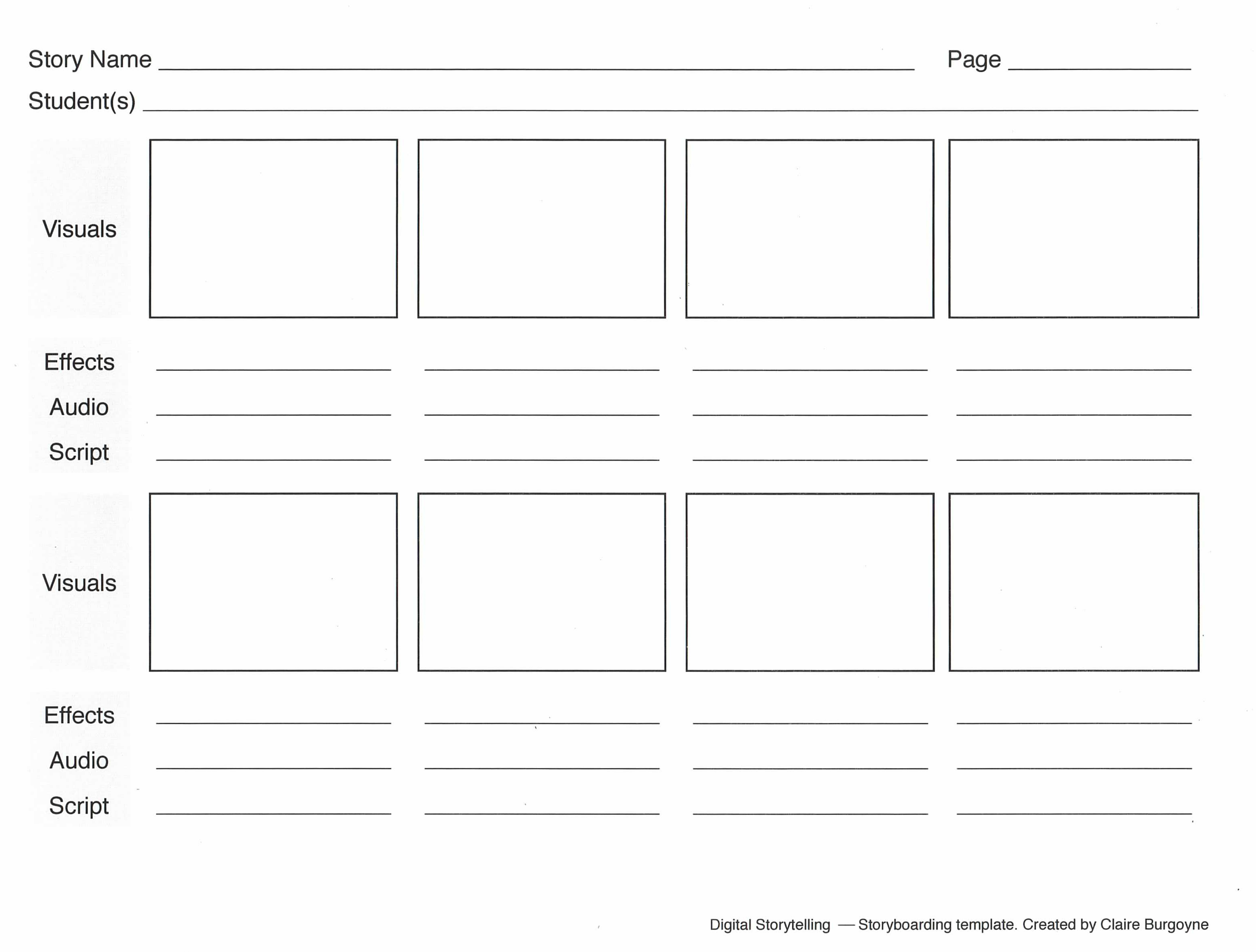
2.)  Paper Planning Page (there are so many online but I like this one) –

.Stories are important, we all have one and we need to share them.  Happy Storytelling.


A picture of video is actually worth a cajillion words….(Flipping the Classroom)

patriation_80_hr_enAfter reading several articles, I’m not sure that Flipping the Classroom is such a revolutionary idea.  While I see many benefits, I’m not sure that I would ever completely embrace this idea, but then again, like anything we can’t overuse any strategy or approach, we must be ready to pull a different tool from our tool box and teach in many different ways.  BUT, how powerful it would be to have more time to seriously explore topics…Ahhh, a Flipping moment…

We are already flipping.  We flip regularly.  Every time I ask a student to pre-read a section of the text, or to reflect on a topic with some materials prior to the next class, I am already flipping, albeit boring.  I see incredible value in flipping in one of our courses (my very favourite actually, Current Topics in First Nation, Metis, and Inuit Studies).  When students come prepared, we very quickly move to opportunities to apply the new knowledge and these are the classes that deliciously leave me feeling satisfied as a teacher.  For this reason alone, I might use this.

Consider a class on the Constitutional Accord of the mid-80s.  This is an important time in our history and it is recorded brilliantly through video that actually recorded these discussions.  There is nothing that I can add to these videos to provide the context.  The students actually get to hear the words come out of Pierre Elliott Trudeau’s mouth and to see examples of systemic racism actually happening.  They simply need time to talk about what they saw, heard, felt and even to process their anger.  So, right now, I show the videos in class, and then we use the sparse time to discuss and to get excited about what this Canadian history means and the many what ifs….  (On a side note, you must watch Dancing Round the Table by the National FilmBoard of Canada – FANTASTIC).  We never have enough time to sink our teeth in to explore and to discuss these ideas as we are watching videos and students are bringing more videos to watch in class and thus I generally feel that for this topic, and many others, we just graze the surface.

A Flip would definitely enhance this class and these learning experiences and I am excited to begin to problem solve through the challenges to create an opportunity.  (I do believe I have expanded my thinking and actually moved to the glass is half full and I am a contemplating Flipper now, instead of a nay sayer…)

Student Centred Learning

Flipped Classroom

This reflection refers to this article.

Far too often, as educators, we get pulled in to the latest trend.  We’ve all done it and we jumped on the  TREND wagon thinking that our teaching is finally going to meet the needs of even the most hard to reach students.  What we forget is that teaching is not about the current trend or “fad” but rather systematically choosing strategies and approaches that will meet the needs of a myriad of learners.  Staying current allows us an arsenal of tools to do this with.

The author, Shelley Wright, talks about her experience with the Flipped Classroom.  She objectively discusses her experience with this approach and the benefits, but also takes us to the unexpected learning that took place.  Her teaching practice and the manner in which her students interacted with her grew in to something that was quite unexpected.

This article provides an opportunity to consider how or even if we will use the Flipped Classroom Approach and when and with whom.  These are all questions to consider and to reflect on regularly.  While the Flipped Classroom presents many many opportunities, it is still a lecture being delivered in a different package.  And does this even matter?  Lectures are necessary in teaching, there is a time and place for lectures..  But what is interesting and inviting about this approach is the opportunity for time.  Time to follow up on those activities that allow our students to expand and to grow in their own learning and to make real life connections.  Hmmm, isn’t this our objective?.

Perhaps the challenge or question to ask ourselves is how do we better meet the needs of our students relying on many tools, approaches and strategies, the Flipped Classroom being something that we use when it makes sense to.